Which of the Following Does Not Describe Fat Soluble Vitamins
Because fat-soluble vitamins are not stored in the body to any great extent deficiency symptoms are quick to appear. Which of the following does not describe fat-soluble vitamins.
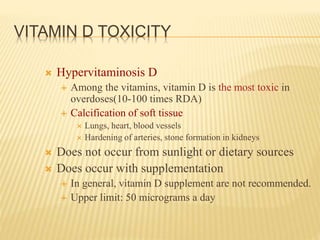
Fat Soluble Vitamins
They are transported via special carriers in the bloodstream.

. Which of the following is an. Pages 27 Ratings 100 1 1 out of 1 people found this document helpful. Although vitamin D is firmly enshrined as one of the four fat-soluble vitamins it is not technically a vitamin.
The leading cause of blindness in the world today excluding accidents is a dietary deficiency of. Water-soluble vitamins are absorbed easily from the intestinal tract into the blood. Beta carotene is an important antioxidant that the body converts to Vitamin Aand it is found in a variety of fruits and.
Excesses are excreted in the urine. They provide a rich source of energy The compound carnitine is required for fatty acid synthesis. Which of the following does not describe fat-soluble vitamins.
Which vitamin does not technically follow the definition of a vitamin. All of the following vitamins are stored extensively in the liver EXCEPT. Fat-soluble vitamins are only needed in small amounts.
They tend to exist in several biologically active forms. Vitamins play a crucial role in our bodys metabolism but only tiny amounts are needed to fill that role. Because fat-soluble vitamins are not stored in the body to any great extent deficiency symptoms are quick to appear.
Which of the following statements does NOT describe water-soluble vitamins. They are needed in relatively small amounts. They are stored in the bodyB.
Which of the following does not describe fat soluble. A - best source of energy for the brain. Course Title NUT 201.
Water-soluble vitamins are rarely toxic. Solutions for Chapter 8 Problem 35MCQ. They are essential organic substances.
Which of the following does not describe a function of fat. Which of the following does not describe fat soluble vitamins A They are stored. Oxygen carbon dioxide water electrolytes urea uric acid fatty acids fat-soluble vitamins narcotics barbiturates anesthetics and.
3 It is the best source of energy for the brain. Also known as calciferol vitamin D comes. They are transported via special carriers in the bloodstream.
Pages 27 This preview shows page 3 - 6 out of 27 pages. Which of the following does not describe fat soluble vitamins A They are stored. Which of the following does not describe fat soluble.
They are stored in the body. 4 It is a storage form of energy. They are transported via the bloodstreamD.
Water-soluble vitamins are stored in large amounts in the body. 1 It is a carrier of fat-soluble vitamins. Which of the following statements does NOT describe water-soluble vitamins.
Water-soluble vitamins like the B complexes are excreted via the urine so if you take in too much of those vitamins the excess is excreted and does not build up therefore it is not toxic. They are stored in the body. Which of the following does not describe a function of fat.
158Which of the following does NOT describe a function of fat. They are fat- or water-soluble. Which of the following does NOT describe a vitamin.
They are stored in the bodyB. Aids in the absorption of calcium. Deficiency symptoms sometimes take a year or more to develop on a poor dietExplanationFat soluble vitamins are vitamins that can be stored in the body for a long time they are more toxic than water soluble.
Excesses are excreted in the urineC. Excesses are excreted in the urine. Which of the following does not describe fat-soluble vitaminsA.
Vitamin D is a collective term used to describe a few related fat-soluble compounds. Asked Sep 4 2021 in Nutritional Science by theetiger21. School Lebanese American University.
True its essential for health and. School Lebanese American University. Water-soluble vitamins are found in a wide variety of foods.
The vitamin that poses the greatest risk for toxicity is A. Active transport of compounds into cells. They are stored in the body.
A D E and K are stored in the body for long periods of time and pose a greater risk for toxicity than water-soluble vitamins. Which of the following does not describe fat-soluble vitaminsA. Water-soluble vitamins are stored in large amounts in the body.
C Which of the following does NOT describe fat-soluble vitamins. Which of the following does NOT describe fat-soluble vitamins. Water-soluble vitamins are absorbed easily from the intestinal tract into the blood.
Identify one function of vitamin D. Which of the following does not describe fat soluble vitamins Answerd. Excesses are excreted in the urineC.
A Best source of energy for the brain B Insulates and protects the body C Adds flavor to food D Carrier of fat-soluble vitamins. Answer Water-soluble vitamins are found in a wide variety of foods. Asked Apr 9 2021 in Nutritional Science by Krista.
They are transported via the bloodstreamD. Excesses are excreted in the urine. Course Title MKT 312.
Solutions for Chapter 8 Problem 35MCQ. Vitamins are classified as. 2 It is an essential component of cell membranes.
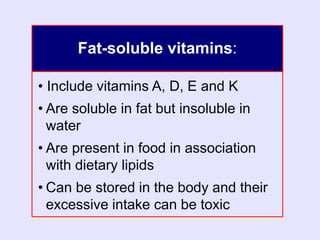
Fat Soluble Vitamins
Fat Soluble Vitamins U O O O U Uso O
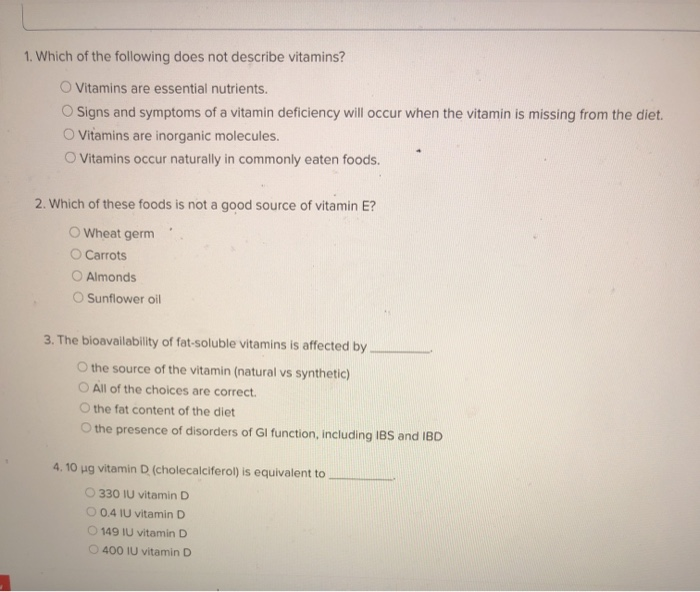
Solved 1 Which Of The Following Does Not Describe Vitamins Chegg Com

Which Of The Following Are Fat Soluble Vitamins 1 Retinol 2 Calciferol 3 Tocopherol 4 Riboflavin


Comments
Post a Comment